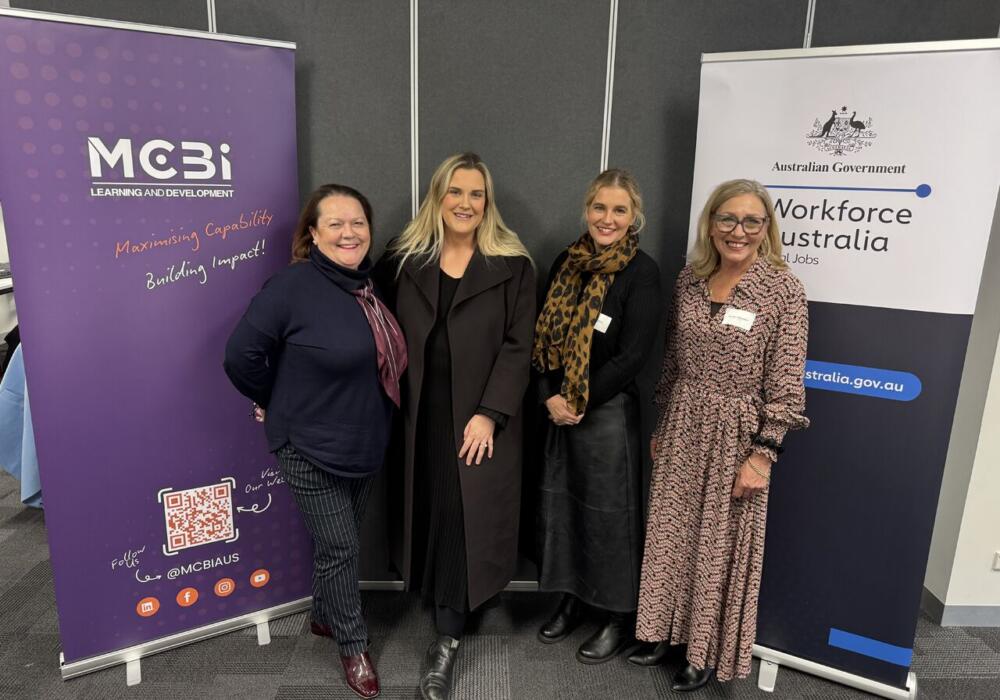
Early June, the Green Triangle region played host to a powerful demonstration of what genuine collaboration can achieve. Held in Mount Gambier, the Local Jobs Cross Border Workforce Summit brought together employers, training providers, employment services, and government stakeholders from both South Australia and Victoria to examine the shared workforce system that underpins this unique region. Delivered in partnership with MCBI and Workforce Australia Local Jobs – Murray and South East, the summit highlighted a simple but often overlooked truth: while borders may exist administratively, they do not define how our labour markets operate.
And so, we approached this session as One Region, One Workforce Spanning South Coast Victoria and the Limestone Coast, the Green Triangle is deeply interconnected—economically, socially, and industrially. Throughout the summit, this was reinforced time and again. A system-level overview of the regional labour market revealed strong headline indicators, including low unemployment. Yet beneath these figures lies a more complex picture: persistent disconnection between job seekers and opportunities, structural barriers to participation, and fragmented approaches across systems that ultimately serve the same people and industries. The message from the room was clear: this is not a challenge belonging to one state or another. It is a shared, cross-border issue that requires a shared response.
Designing Around What Matters
In the lead-up to the summit, attendees were surveyed about the issues most affecting their organisations and communities. Recruitment difficulties, skills gaps, workforce retention, and rising operational costs emerged as dominant concerns—and these shaped the day’s agenda.
Interestingly, transport ranked fifth in the survey yet became one of the most prominent themes in discussion. Across both sides of the border, limited public transport continues to restrict workforce participation, particularly for those living outside key employment hubs. It is a stark reminder that workforce challenges don’t sit neatly within program or policy boundaries—they are lived realities, often shaped by place and infrastructure.
Insights from Across the System
The summit featured a diverse range of speakers and panel discussions, each offering insights from different parts of the workforce ecosystem.
The South Australian Office of the Cross Border Commissioner, set the tone by reinforcing that the SA-VIC border is an administrative construct—not an economic one. This perspective was grounded in local experience through reflections from LITA Training and Prince Engineering, who shared on-the-ground realities from each side of the border.
The Green Triangle Forest Industries Hub showcased the region’s global significance in forestry, a powerful reminder of the region’s economic strength and the importance of sustaining a skilled and connected workforce.
A data-driven session led by Local Jobs Coordinators Christine Willersdorf and Angela Williams highlighted just how aligned the two regions are: the same priority industries, the same cohorts experiencing disadvantage, and the same systemic barriers. The opportunity—and challenge—lies in aligning efforts to better serve this unified workforce.
Honest Conversations, Real Opportunities
The summit’s panel discussions brought candour and practical insight to key areas of workforce development:
- Skills and Training: Representatives from TAFE SA, South West TAFE, and LITA Training spoke openly about what is and isn’t working. Their insights highlighted the need for more flexible, regionally responsive training models that reflect industry demand.
- Apprenticeships and Workforce Development: Panellists from SYC Limited, Apprenticeship Support Australia, Mas National, and GTE Apprenticeships & Traineeships emphasised the growing interest in degree apprenticeships. Making these pathways accessible in regional areas presents a significant opportunity to boost retention and strengthen local economies.
- Employment Services: Providers including IntoJobs, SYC Limited, Sureway Employment and Training, and UnitingSA addressed common misconceptions about programs, unpacked how services operate, and contributed to a clearer understanding of how partnerships can be strengthened to better support participants.
Across all discussions, there was a shared commitment to working more collaboratively—moving beyond silos to create a more integrated and responsive workforce system.
Collaboration as the Lever
The success of the summit reflects the strength of partnerships across the Local Jobs Program. Local Jobs Coordinators Christine Willersdorf (Limestone Coast) and Angela Williams (South West Victoria) played a central role in bringing stakeholders together and ensuring that the conversation stayed grounded in regional realities.
Supported by the Department of Employment and Workplace Relations, the Local Jobs Program demonstrates what is possible when workforce planning is approached through a regional lens—one that values collaboration across governments, sectors, and communities.
MCBI’s leadership in shaping the day ensured that the agenda reflected the voices and priorities of those living and working in the region, while TAFE SA Mount Gambier provided a welcoming venue that reinforced the importance of local institutions in driving regional outcomes.
Looking Ahead
The Cross Border Workforce Summit was more than a one-day event—it was a step toward a more aligned, collaborative approach to workforce development in the Green Triangle.
The insights gained, partnerships strengthened, and conversations started will continue to inform how the region works together to unlock untapped talent, address shared challenges, and build a workforce system that truly reflects the needs of its communities.
If you would like to be a part of the conversation; please feel free to reach out to Angela.Williams@localjobs.org.au